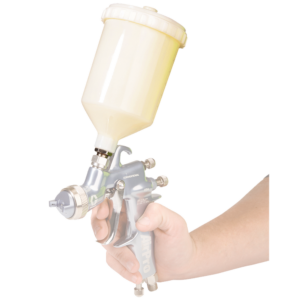
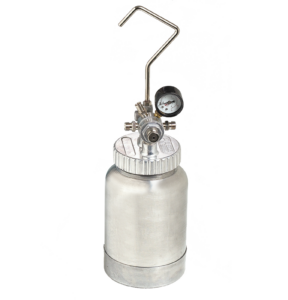
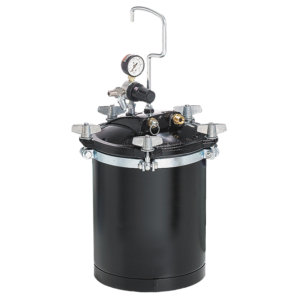
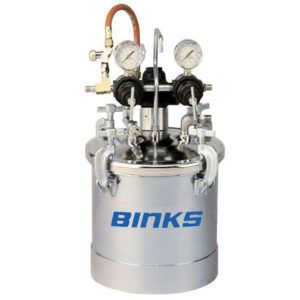
Mounting of cup above gun rather than below assists spraying horizontal surfaces.
Pressure feeding of fluid to spray gun
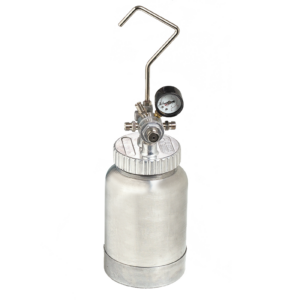
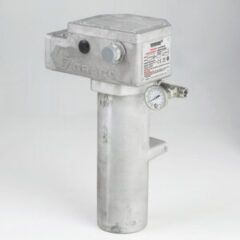
Economy pressure pot for infrequent use or low budgets
Widely used in automotive, oil-based, latex, varnish, paint, primer, wood coating, adhesive, etc.
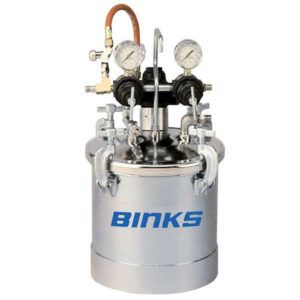
AirSpray Conventional Pressure Pot, used most commonly for spraying thin coatings
Air Spray / Conventional Sprayers
Zinc primers
Pressure Pot replacement
Fine finish spraying
Features
Even material distribution through the spray pattern for optimum coverage
Improved transfer efficiency through reduced air consumption
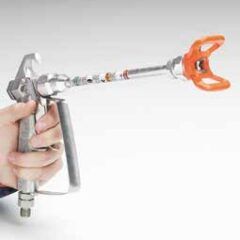
Well balanced and lightweight (410 grams) gun makes it easier to spray at a steady rate all day
Low cost reduces loss if damaged or lost
Allows smaller volumes of coatings to be applied by pressure feed
Ideal for touch-up work
10 liter capacity
Standard and agitated setups
Waterborne compatible versions
Multiple sizes available
2.8 Gallon capacity, allows you to mix up a standard 2 gallon kit of paint with ease
Single or Dual Regulators available
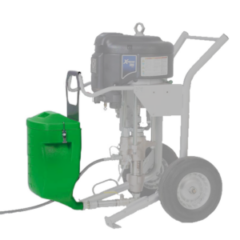
Agitators – if you are spraying coatings like zinc where it will settle out, you need an agitator kit
Wastes more paint, thinner, and time than the Warrior
Requires more clean-up time
Disadvantages
Complexity
Number of parts
None
Best for infrequent use
Best for infrequent use
Not suitable for hi-build primers
Difficult to service in the field
Spray Pump Videos
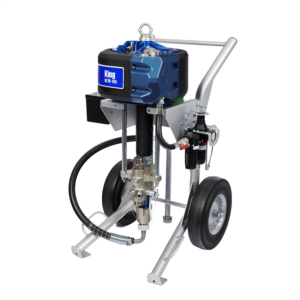
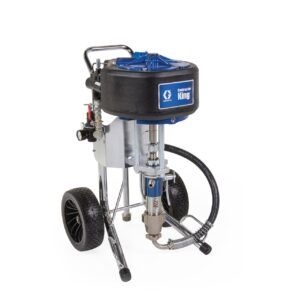
New Graco Airless Sprayer : Largest pump available
Mixing High Viscosity Coatings
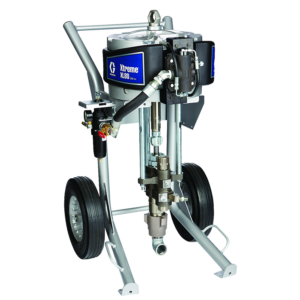
Flushing and cleaning a Graco Xtreme airless sprayer
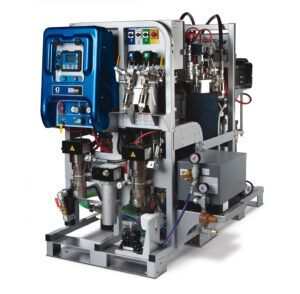
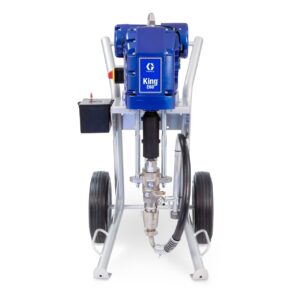
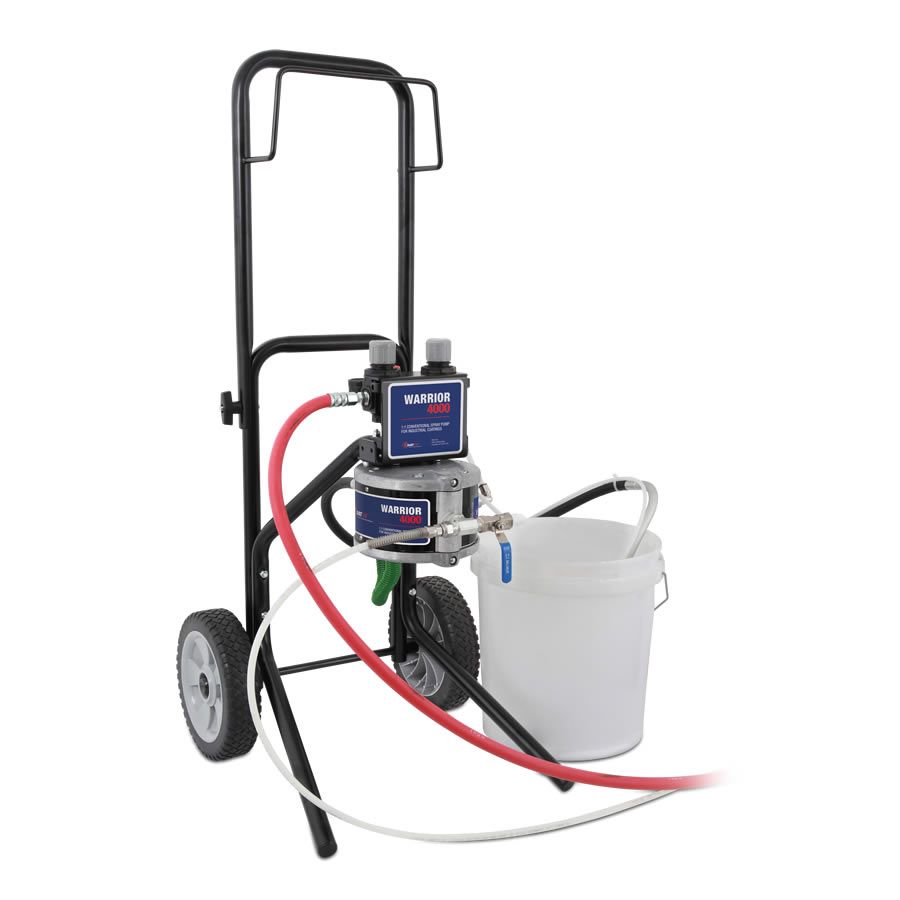
Warrior Pump – Commercial Painting Equipment
How to spray high solids coatings easier
Airless Spray Pump Introduction
Non-Slip Granular Coatings: When, How, & How Much
Tips For Spraying High Solid Coatings
Storing airless spray pump with wetted lines
Important considerations when selecting an industrial spray pump
Choosing the right spray pump for your application is very important. There are a lot of considerations, but number one is, will it spray the coating you are trying to apply. Before you go through these questions, get yourself an up to date datasheet of the coating that you are needing to apply. Remember it is possible to rent a spray pump if you have a one off job, so find a sprayer that will fit 90-95% of your requirements.
What pressure does the coating require for correct atomization?
This will be available from the data sheet supplied by your coating supplier.
What application rate do you require?
This will be dependent on how many square feet/meters you want to apply in a shift
What pot-life does your coating have?
i.e. How long between mixing and not being able to be applied? Products with less than 30 minutes pot-life will require a 2K system.
Does your coating require agitation?
If spraying zinc primers, check with your coatings supplier if it needs agitation.
Does your coating require heating?
Some very thick coatings may require heating to make them viscous enough to flow through a spray pump.
Why use an Airless Sprayer vs Conventional AirSpray
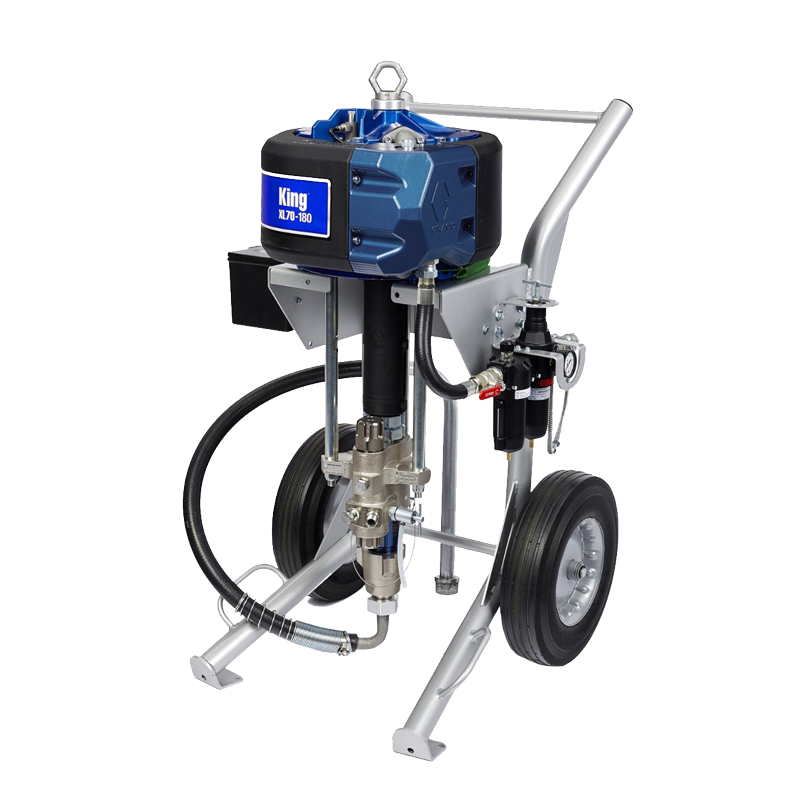
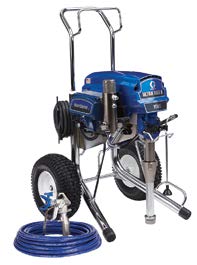
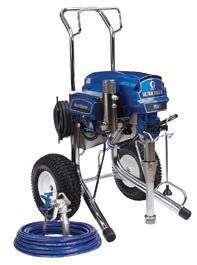
Airless sprayers are ideal for applying coatings that are challenging to handle with conventional air spray equipment, such as pressure pots or cup guns. The primary reasons to switch to an airless system are the need to apply heavy industrial coatings and the volume of material to be sprayed. Airless sprayers can generate the high pressure necessary for properly atomizing thicker coatings, which conventional air spray systems often cannot achieve. Additionally, airless sprayers are better suited for applying large volumes of material, making them essential for industrial applications.
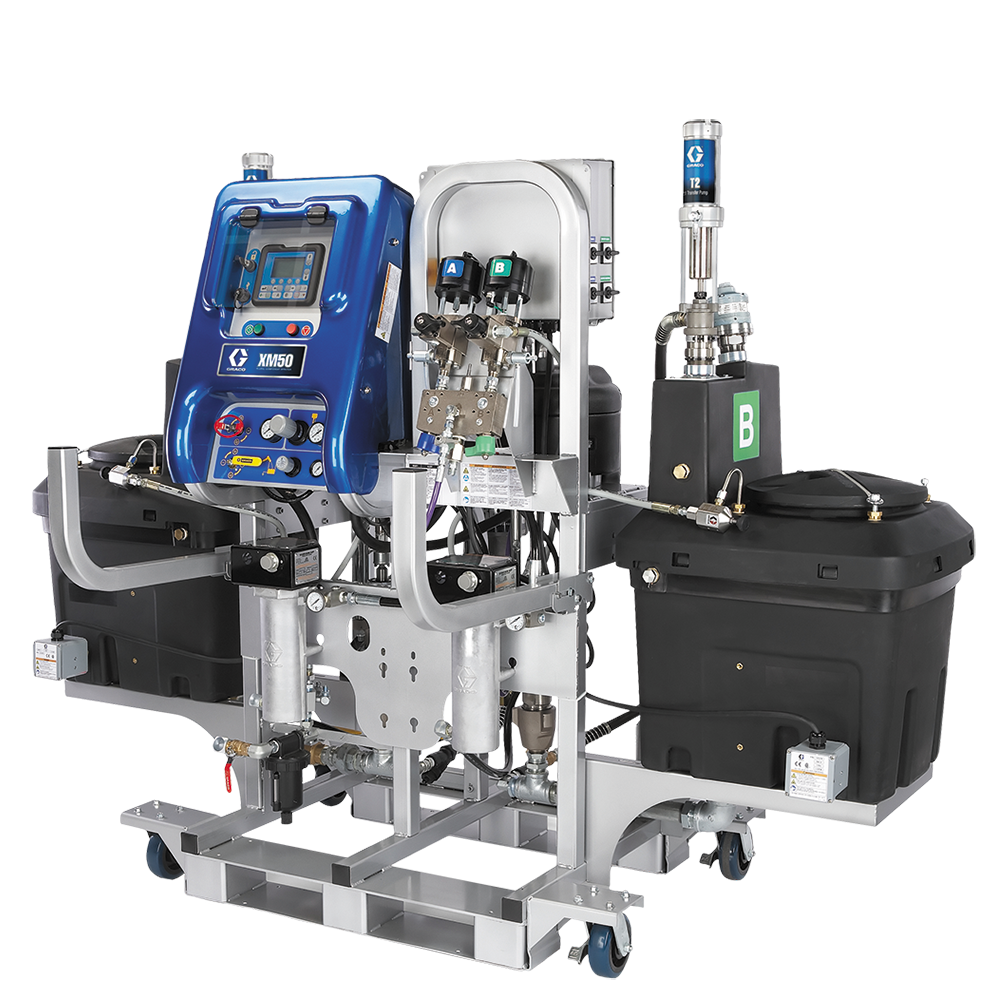
When to Use a Plural Component Airless Pump
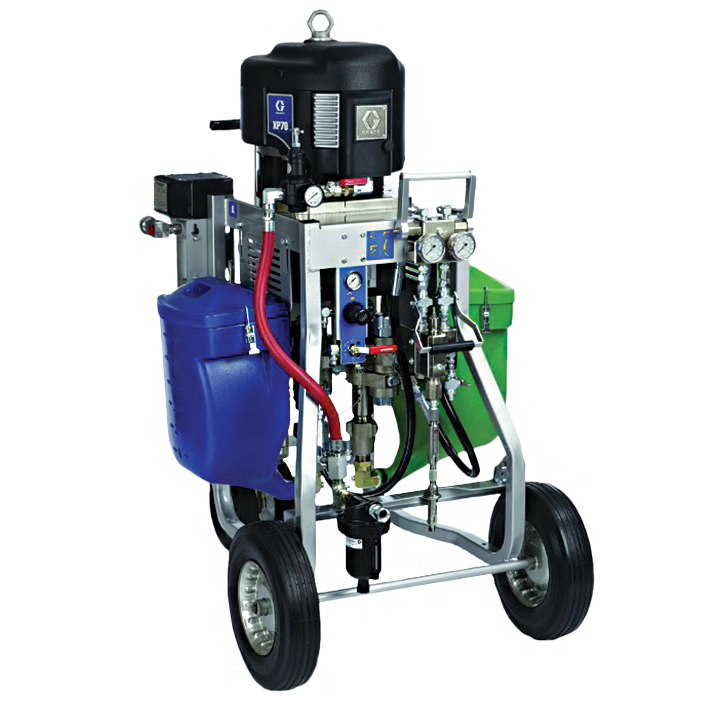
Choosing between a single-component (1K) or a plural-component (2K) airless pump depends on the pot life of the coating. If the pot life exceeds 30 minutes, a 1K system may suffice. However, coatings with a shorter pot life require a 2K system. The benefits of a 2K airless pump include reducing human error in mixing and minimizing material waste, as the system mixes on demand, ensuring only the necessary amount of coating is prepared.
Common issues with spray pumps
One common challenge when using airless spray pumps is applying zinc primers. These coatings consist of powder suspended in a solvent, which can cause two issues: the powder may fall out of suspension, and the high pressure of airless pumps can cause the powder to pack in, separating from the solvent. To counteract this, zinc primers require constant mechanical agitation and are best applied with low-pressure pumps like the Warrior.
While airless pumps are excellent for high-volume spraying, they may sacrifice finish quality compared to conventional air spray systems. For better finish quality with airless pumps, consider using a finishing tip with an additional orifice to enhance atomization or an air-assisted airless gun that introduces air to the tip holder for finer atomization.
Frequently Asked Questions
What is the maximum pressure that spray pumps can spray at?
Commonly, pumps are available that spray at up to 7500 psi.
What is the maximum flow rate available in a spray pump?
Spray pumps are available at up to 15 liters minute flow rate. At 15 liters per minute a spray pump will most likely will not be able to spray at 7500 psi. At the upper limits of a spray pump’s performance, there will always be some trade off between pressure and flow, i.e. you can have 7500 psi or 15 liters per minute but not both.
How short a pot-life can a spray pump work with?
The XM and XP pumps featured in this comparison will cope with materials with a 3 to 30 minute pot-life. Other systems are available that will apply coatings that have a pot life of seconds.
What options are there for feeding a spray pump?
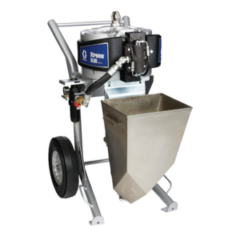
The most commonly used feed component for a spray pump is a suction pick-up tube. Some heavy industrial coatings are difficult to feed into a suction pump and cause cavitation (sucking in air with the material feed and creating air bubbles in the material in the pump, This interferes with the smooth operation of the pump). To overcome this a gravity feed hopper can be installed on a spray pump. This is mounted on the pump and forces the material into the feed. For plural component systems where the material may be delivered to site in 44 gal. drums or IBC, the containers can be fitted separate pumps to pump out of the supply container and in to the spray pump.
How easy are spray pumps to service?
It varies. For most single leg (for premixed or single component coatings) pumps common maintenance tasks on the pump lower can be performed in the field by someone with reasonable mechanical aptitude. Service and repair of spray pump motors, both electric and pneumatic, is best performed in a workshop. For plural component spray pumps, their additional complexity necessitates the need for trained service personnel. This doesn’t mean that they can’t be serviced in the field. A certain amount of repairs and maintenance can still be done in the field by suitably trained service personnel.
How easy are spray pumps to operate?
As with servicing them, the single leg pumps are easier to easier to operate than plural component units. Single leg spray pump operation can be taught in-house by a contractor or self taught by using the operation guides and manuals. Plural component systems will usually require specialist training from the equipment supplier.
We love to talk to customers and help them make the best decisions when purchasing equipment.
You can reach us via our Live Chat, Email, Phone, and Online Form.
Cookie Policy:
Our website will NOT allow you to Register or Shop if we cannot detect if you are a real person, bot, spammer, or scammer. Cookie Policy. We use cookies to improve your experience on our site. By using our site, you consent to cookies. You will need to accept the necessary cookies in order to register and shop our website.
Cookie Preferences
Manage your cookie preferences below:
Essential cookies enable basic functions and are necessary for the proper function of the website.
Name
Description
Duration
Cookie Preferences
This cookie is used to store the user's cookie consent preferences.
30 days
Google Tag Manager simplifies the management of marketing tags on your website without code changes.
Name
Description
Duration
cookiePreferences
Registers cookie preferences of a user
2 years
td
Registers statistical data on users' behaviour on the website. Used for internal analytics by the website operator.
session
These cookies are used for managing login functionality on this website.
Name
Description
Duration
wordpress_logged_in
Used to store logged-in users.
Persistent
wordpress_sec
Used to track the user across multiple sessions.
15 days
wordpress_test_cookie
Used to determine if cookies are enabled.
Session
SourceBuster is used by WooCommerce for order attribution based on user source.
Name
Description
Duration
sbjs_session
The number of page views in this session and the current page path
30 minutes
sbjs_udata
Information about the visitor’s user agent, such as IP, the browser, and the device type
session
sbjs_first
Traffic origin information for the visitor’s first visit to your store (only applicable if the visitor returns before the session expires)
session
sbjs_current
Traffic origin information for the visitor’s current visit to your store
session
sbjs_first_add
Timestamp, referring URL, and entry page for your visitor’s first visit to your store (only applicable if the visitor returns before the session expires)
session
sbjs_current_add
Timestamp, referring URL, and entry page for your visitor’s current visit to your store
session
sbjs_migrations
Technical data to help with migrations between different versions of the tracking feature
session
Statistics cookies collect information anonymously. This information helps us understand how visitors use our website.
Marketing cookies are used to follow visitors to websites. The intention is to show ads that are relevant and engaging to the individual user.
A video-sharing platform for users to upload, view, and share videos across various genres and topics.
Tries to estimate the users' bandwidth on pages with integrated YouTube videos. Also used for marketing
179 days
PREF
This cookie stores your preferences and other information, in particular preferred language, how many search results you wish to be shown on your page, and whether or not you wish to have Google’s SafeSearch filter turned on.
10 years from set/ update
YSC
Registers a unique ID to keep statistics of what videos from YouTube the user has seen.
Session
DEVICE_INFO
Used to detect if the visitor has accepted the marketing category in the cookie banner. This cookie is necessary for GDPR-compliance of the website.
179 days
LOGIN_INFO
This cookie is used to play YouTube videos embedded on the website.
2 years
VISITOR_PRIVACY_METADATA
Youtube visitor privacy metadata cookie
180 days
GPS
Registers a unique ID on mobile devices to enable tracking based on geographical GPS location.
 My Account