My Account

Blast Nozzle Care & Wear: Maximizing Nozzle Life
Why Nozzle Care Matters
- The blast nozzle determines your blasting power, efficiency, and surface quality.
- A worn nozzle increases air consumption, lowers pressure, slows production, and wastes media.
- Proper care maintains consistent performance and extends lifespan.
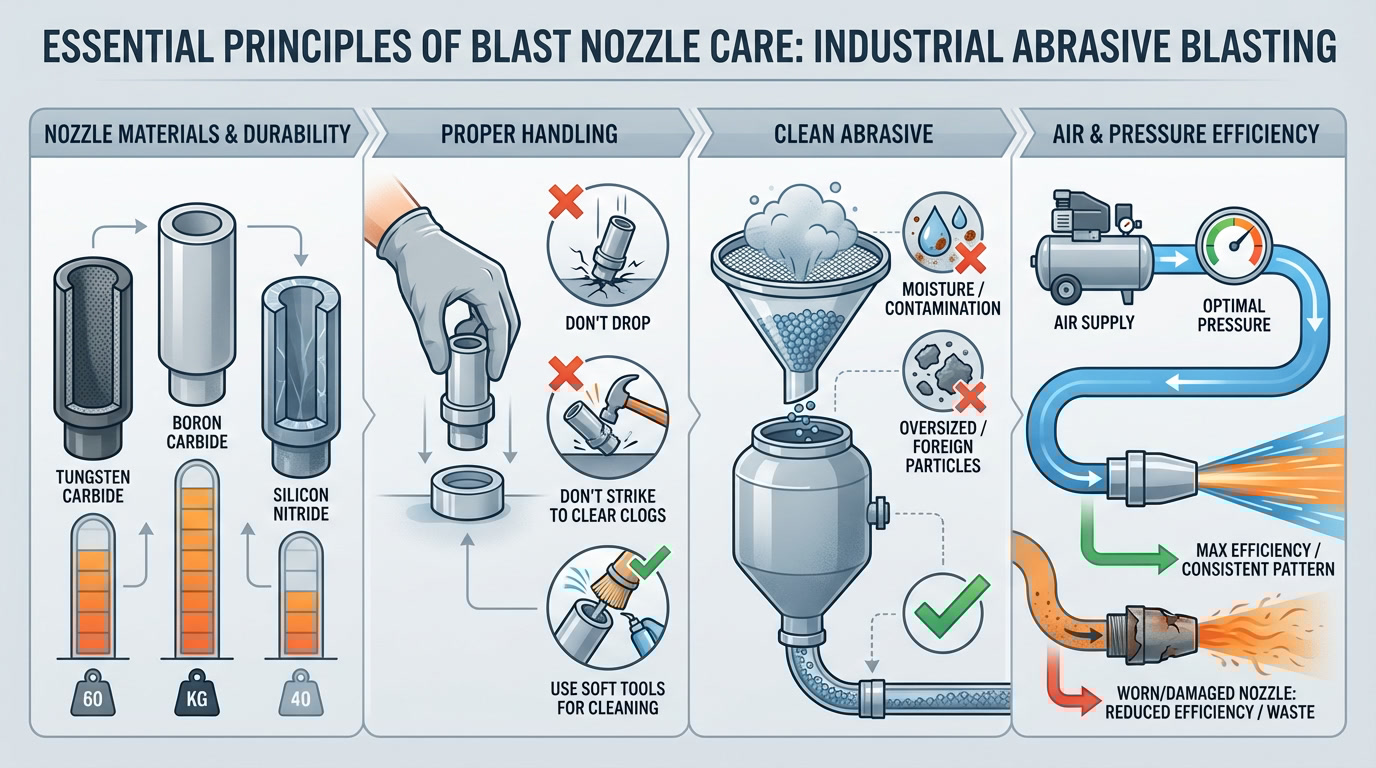
Nozzle Materials and Durability
- Tungsten Carbide: Long-lasting, ideal for garnet, steel grit, and slag. Example:
TVP Tungsten Carbide Blast Nozzle. - Boron Carbide: 3–5× longer life than tungsten; best for aluminum oxide and silicon carbide.
Curved Boron Carbide Blast Nozzle. - Silicon Nitride: Long life, lightweight, impact-resistant.
Ultra-Tuff SiNi Blast Nozzle.
Proper Handling and Care
- Never strike a nozzle on steel to clear clogs.
- Use a wooden dowel or soft rod to gently remove blockages.
- Strain abrasive before loading to prevent debris damage.
- Use polyurethane-jacketed nozzles for added shock protection.
- Cap the nozzle tip when not in use and avoid dragging it by the hose.
- See lightweight shock-resistant option:
Ultra-Tuff Silicon Nitride Nozzle.
Recognizing and Measuring Nozzle Wear
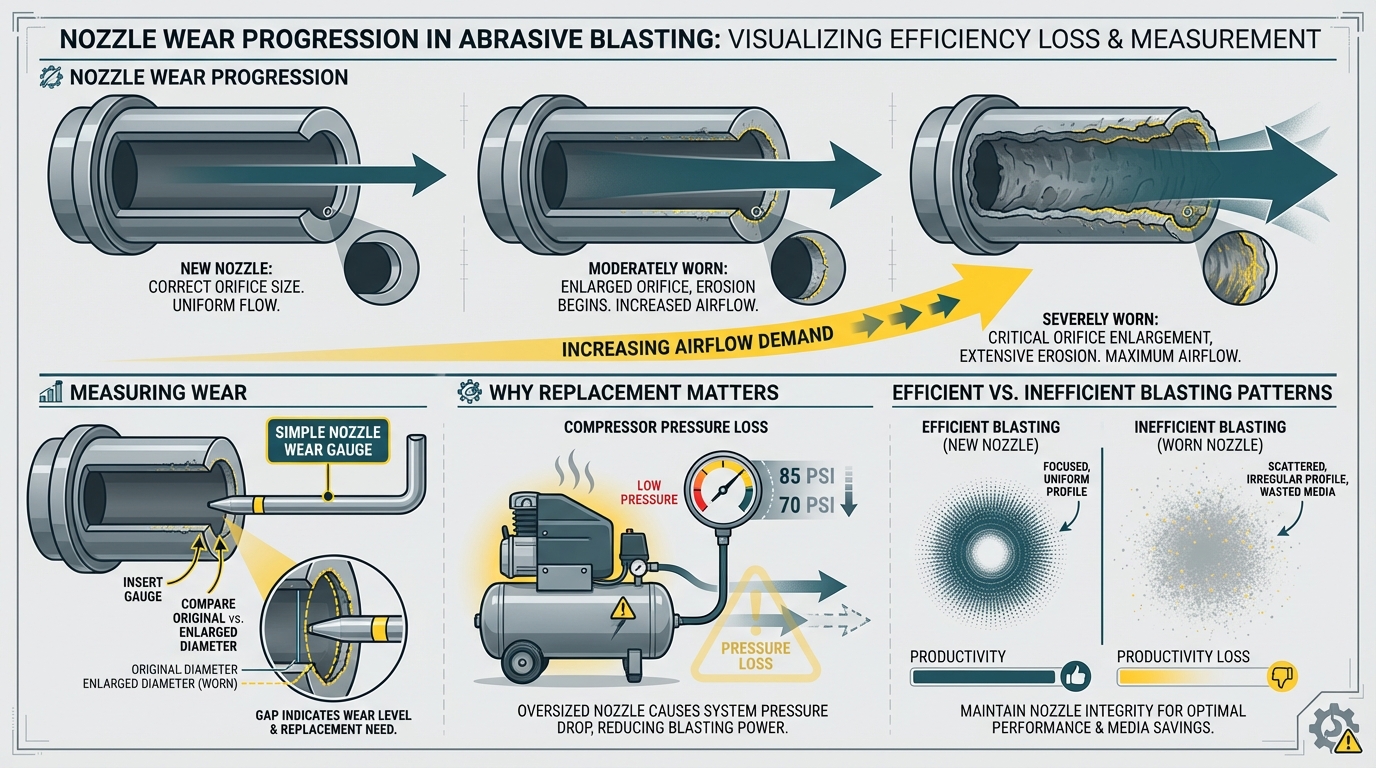
- Nozzles gradually enlarge from abrasive erosion.
- Replace the nozzle when the orifice grows by approximately 1/32 inch (0.8 mm).
- Visual inspection is unreliable—use a wear gauge.
- Tool: Nozzle Wear Gauge.
- Increased compressor load or falling pressure indicates nozzle enlargement.
Effects of Wear on Performance
- Larger orifice size increases air demand and can drop pressure significantly.
- Every 1 psi lost equates to approximately 1.5% productivity loss.
- Lower abrasive velocity increases media waste and accelerates hose wear.
Proper Sizing
- Use the largest nozzle your compressor can supply at around 100 psi at the nozzle.
- If pressure cannot be maintained, downsize the nozzle rather than overloading the compressor.
- Reference: Blast Nozzle Buying Guide.
Clean, Dry Abrasive
- Moist or contaminated abrasive clumps and can cause liner damage or blockages.
- Use moisture separators and air dryers to ensure clean abrasive flow.
- Screen abrasive during loading to prevent oversize debris entering the blast pot.
- Related info: AirPrep Moisture Removal Guide.
Correct Technique
- Maintain a 6–12 inch standoff distance for optimal performance.
- Too close: increased ricochet and potential liner damage.
- Too far: increased dust ingestion leading to accelerated wear.
- Ensure correct hose sizing: Blast Hose Sizing Guide.
Temperature and Rotation
- Nozzles can heat from continuous blasting; allow cooling breaks.
- Rotate between two nozzles to extend service life.
When to Replace
- Replace when orifice size is 1/32 inch over its original diameter.
- Replace if cracks, chips, or unusual air patterns appear.
- Replace worn gaskets to avoid thread wear and leaks:
Nozzle Gaskets.
Selecting the Right Nozzle for the Job
| Abrasive Type | Recommended Liner | Example Product |
|---|---|---|
| Garnet / Steel Grit | Tungsten Carbide | TVP Tungsten Carbide Venturi |
| Aluminum Oxide / Silicon Carbide | Boron Carbide | Boron Carbide Curved Nozzle |
| Coal Slag / Glass Bead / General Use | Silicon Nitride | Ultra-Tuff SiNi Nozzle |
- Full comparison chart: BlastOne Nozzle Selection Guide.
Innovation Spotlight: Low-Noise Nozzles
- Low-noise nozzles significantly reduce sound levels and recoil force.
- Example: SnakeBite XQ Silenced Nozzle.
- See additional options:
Silenced Nozzles.
Storage Tips
- Blow out abrasive before storing nozzles.
- Store in a padded box or wrapped in cloth.
- Use a rubber tip cap to prevent impact damage.